Valencia: Is It Worth Visiting, and How Many Days?
Valencia suits first-time visitors who want a big city with a walkable old town and a long city park, and who care about food: paella comes from here. Give it 2 to 3 days, plus a half day if you want the Albufera lagoon. From Madrid, Renfe's AVE takes 1 h 54 min to 2 h 05 min; from Barcelona, the Euromed takes 2 h 47 min to 3 h 26 min.

- Time needed2–3 days
- MapOpen in Google Maps
On this page
Is Valencia worth visiting?
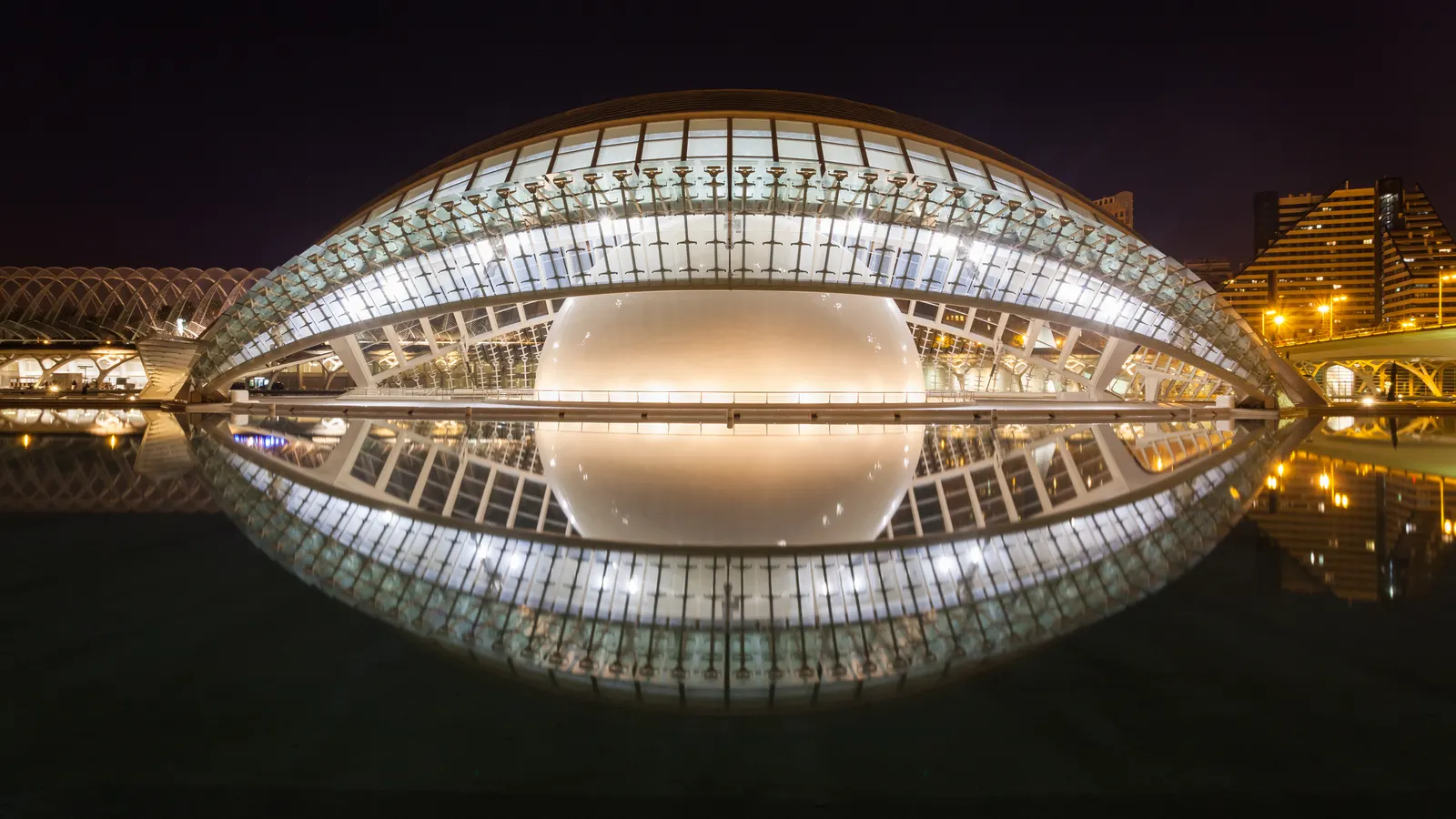
Yes, for most first-time visitors. Valencia is Spain’s third-largest city, with 841,558 people (Wikipedia). It has a Gothic old town, a park that runs through the city in an old riverbed, and the futuristic City of Arts and Sciences at the end of that park.
It suits you if you like food markets and want a slower pace than Madrid or Barcelona. Paella comes from the Valencian Community, and its modern form is traced to the rice-growing area around the Albufera lagoon next to the city.
You might skip it if your trip is short and you want the big-name art and architecture: Madrid has the Prado, Barcelona has Gaudí. Valencia’s top sights are good, but none is on that level of fame.
What to see
- Silk Exchange (Lonja de la Seda): a late Gothic trading hall built from 1483, on the UNESCO World Heritage list since 1996 (UNESCO). Entry is €2, and free on Sundays and public holidays. Open Monday to Saturday 10:00–19:00, Sundays and holidays 10:00–14:00 (Visit València, checked 14 October 2026).
- Valencia Cathedral: consecrated in 1238, mostly Valencian Gothic. One chapel holds a cup that many believe is the Holy Grail (Wikipedia). The visit costs €12 with an audio guide in 10 languages, including English. From October to June it’s open Monday to Friday 10:30–18:30, Saturday 10:30–17:30 and Sunday 14:00–17:30; from 1 July to 30 September, Saturdays run to 18:30 and Sundays 14:00–18:30 (Catedral de Valencia, checked 14 October 2026).
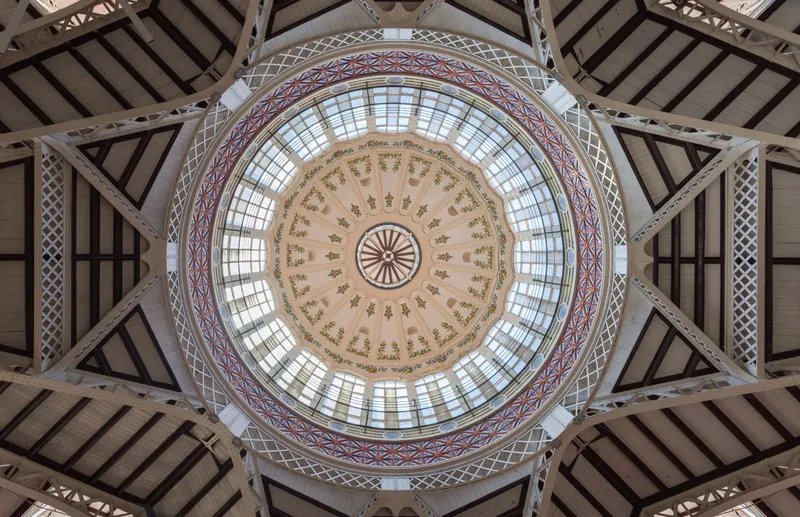
- Central Market (Mercado Central): a food market under a large dome, right across from the Silk Exchange. Open Monday to Saturday, 7:30–15:00 (Mercado Central, checked 14 October 2026). Go in the morning.
- Torres de Serranos: a 14th-century city gate, built between 1392 and 1398. It’s one of the few parts of the old city wall still standing (Wikipedia).
- Turia Garden: a public park in the former bed of the Turia, which was diverted after the 1957 flood. It’s about 8.5 km long and opened in 1986 (Wikipedia). Walk or cycle it from the old town to the City of Arts and Sciences.
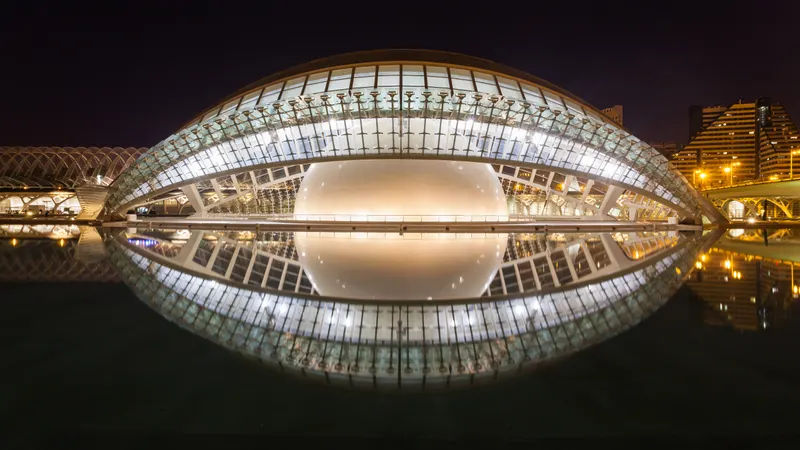
- City of Arts and Sciences: Santiago Calatrava and Félix Candela’s complex, opened in stages from 1998 (Wikipedia). You can walk around the buildings for free.
- Oceanogràfic: the aquarium in the same complex. An adult general ticket costs €35.90 to €43.05 depending on the date. Hours change through the year, from 10:00–16:00 up to 10:00–22:00, so check the calendar before you go (Oceanogràfic, checked 14 October 2026).
- Albufera: a freshwater lagoon and nature park 11 km south of the city, surrounded by rice fields (Wikipedia). Go for a boat trip at sunset and a paella in El Palmar.
How many days
2 days covers the old town on day one (cathedral, Silk Exchange, Central Market, Torres de Serranos) and the Turia Garden and City of Arts and Sciences on day two. 3 days lets you add the Oceanogràfic or a half day at the Albufera. See our itineraries to fit Valencia into a longer trip.
Getting there
| From | Train | Time | Direct trains |
|---|---|---|---|
| Madrid (mostly Chamartín) | Renfe AVE / AVLO | 1 h 54 min – 2 h 05 min | 15 |
| Barcelona Sants | Renfe Euromed | 2 h 47 min – 3 h 26 min | 6 |
Times and counts are from Renfe’s open timetable data for Wednesday 21 October 2026 (downloaded 14 October 2026). Trains from Madrid and Barcelona arrive at València-Joaquín Sorolla. On the Barcelona route, one Intercity (3 h 27 min) and one Alvia (3 h 57 min) also run direct. Ouigo and Iryo also run trains between Madrid and Valencia. More in getting around Spain.
By air: Valencia Airport is 8 km west of the city. Metrovalencia lines 3 and 5 run from the airport to the city centre in about 15 minutes (Wikipedia).
Where to stay
- Ciutat Vella (the old town): you can walk to the cathedral, the Silk Exchange and the Central Market, and the Turia Garden runs along its northern edge.
- Russafa: just south of the old town and the Estació del Nord. Pick it if you’d rather sleep outside the busiest streets of the centre.
More options in where to stay in Spain.
When to go
Valencia has a mild climate. The average high is 16.4 °C in January and 30.2 °C in August. October is the wettest month, with an average of 77 mm of rain (AEMET normals for Valencia, 1981–2010). Spring and autumn suit walking the city best. See the best time to visit Spain.
The big event is Fallas, with its main days from 15 to 19 March. UNESCO added it to its list of intangible cultural heritage in 2016 (Wikipedia). Book your room early if you plan to go then.
Tours that include Valencia
Valencia
Valencia: Oceanogràfic Entry Ticket
General admission ticket with access to all exhibits; food and drinks not included.
From €37on GetYourGuide →
Valencia
Valencia: Essentials Walking Tour of 3 World Heritage Sites
Guided walk with entrance to the Silk Exchange and the City Hall, subject to opening.
From €20on GetYourGuide →
Valencia
Valencia: Old Town Tour, Wine & Tapas in an 11th c. Monument
Guided old-town walk in English, then a full tasting menu of tapas, paella and dessert with wine.
From €80on GetYourGuide →
Valencia
Valencia: Paella Cooking Class with Central Market Tour
Paella class with a chef, all ingredients, tapas, wine and dessert; the Central Market visit is on morning sessions Monday to Saturday only.
From €70on GetYourGuide →
Valencia
From Valencia: Albufera Natural Park with Sunset Boat Tour
Return coach to the Albufera, a nature walk with a local guide and a sunset boat trip on the lake; food and drinks not included.
From €39on GetYourGuide →
Valencia
From Valencia: Guadalest, Altea & Algar Waterfalls Day Trip
Return coach and guide, free time in Altea and Guadalest, and entry to the Algar Waterfalls; meals and Guadalest museums not included.
From €45on GetYourGuide →
Prices and ratings as shown on GetYourGuide on 14 October 2026; they change, so check the live page. We earn a commission if you book through these links, at no extra cost to you. How this works.
Frequently asked questions
Is Valencia worth visiting?
Yes, if you like old towns, food markets and modern architecture in one place. The Silk Exchange is a UNESCO World Heritage Site, the Turia Garden runs about 8.5 km through the city, and paella comes from the Albufera area just south of it. If you only have time for one coastal city and want Gaudí, pick Barcelona instead.
How many days do you need in Valencia?
Two days covers the old town (cathedral, Silk Exchange, Central Market) and the City of Arts and Sciences. Add a third day for the Oceanogràfic or a half-day trip to the Albufera lagoon.
Do you need to book the Oceanogràfic in advance?
It's the one ticket worth buying ahead. The official site sells tickets online by date, and an adult general ticket costs between €35.90 and €43.05 depending on the day (oceanografic.org, checked 14 October 2026). The ticket office closes 1 hour before the aquarium does.
How do you get to Valencia from Madrid or Barcelona?
From Madrid, Renfe runs 15 direct AVE and AVLO trains on a typical weekday, taking 1 h 54 min to 2 h 05 min, mostly from Chamartín (Renfe timetable data for 21 October 2026). Ouigo and Iryo also run Madrid–Valencia. From Barcelona Sants, Renfe's Euromed takes 2 h 47 min to 3 h 26 min.